
Anne Frank: A History for Today
Holocaust Education in Motion
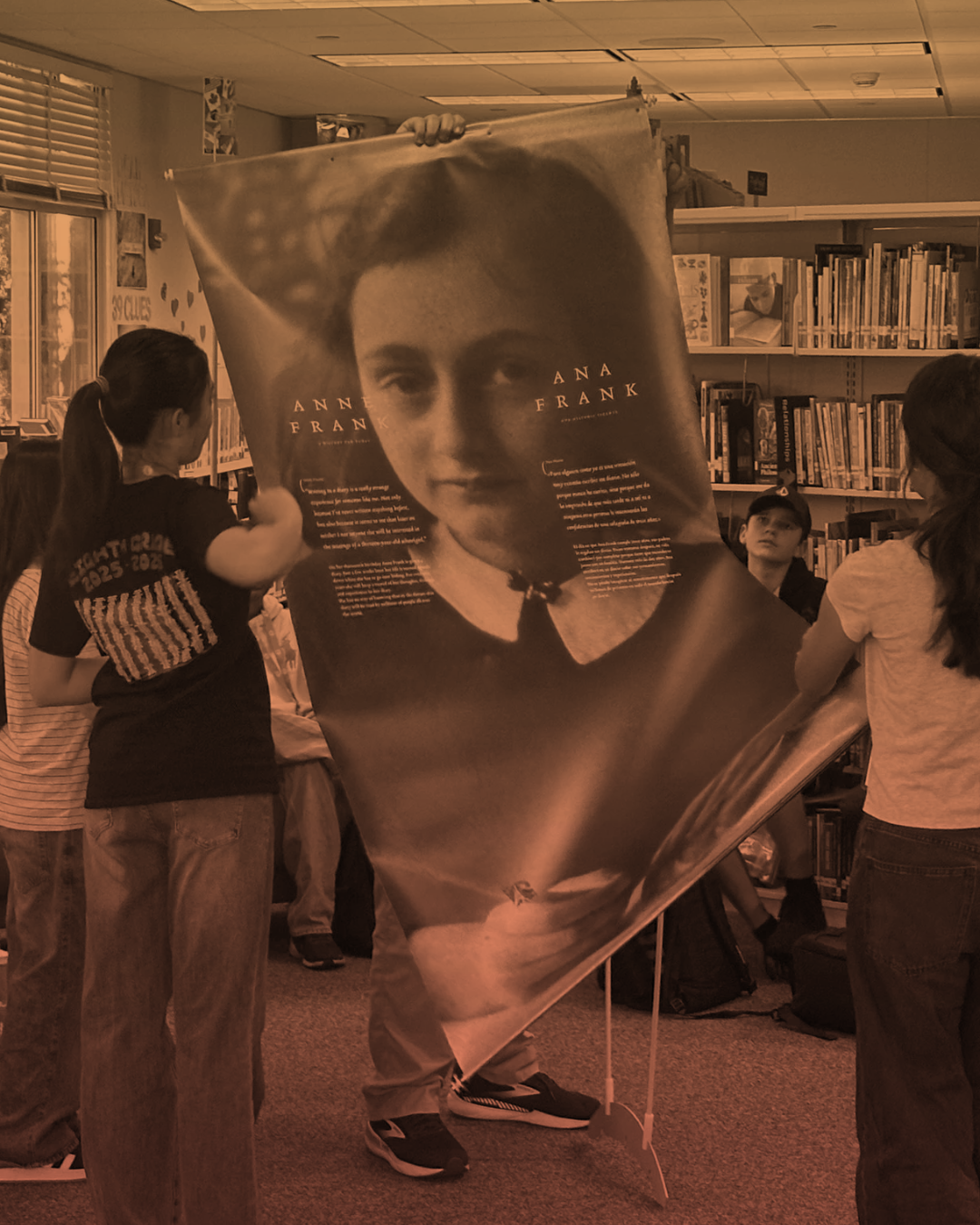
Created by the Anne Frank House in Amsterdam and presented in the United States and Canada through the Anne Frank Center at the University of South Carolina, this internationally-recognized traveling exhibit uses Anne Frank’s story to help students explore the history of the Holocaust, the dangers of antisemitism and prejudice, and the importance of civic responsibility today.
History Through Human Stories
Connecting Students to the Past
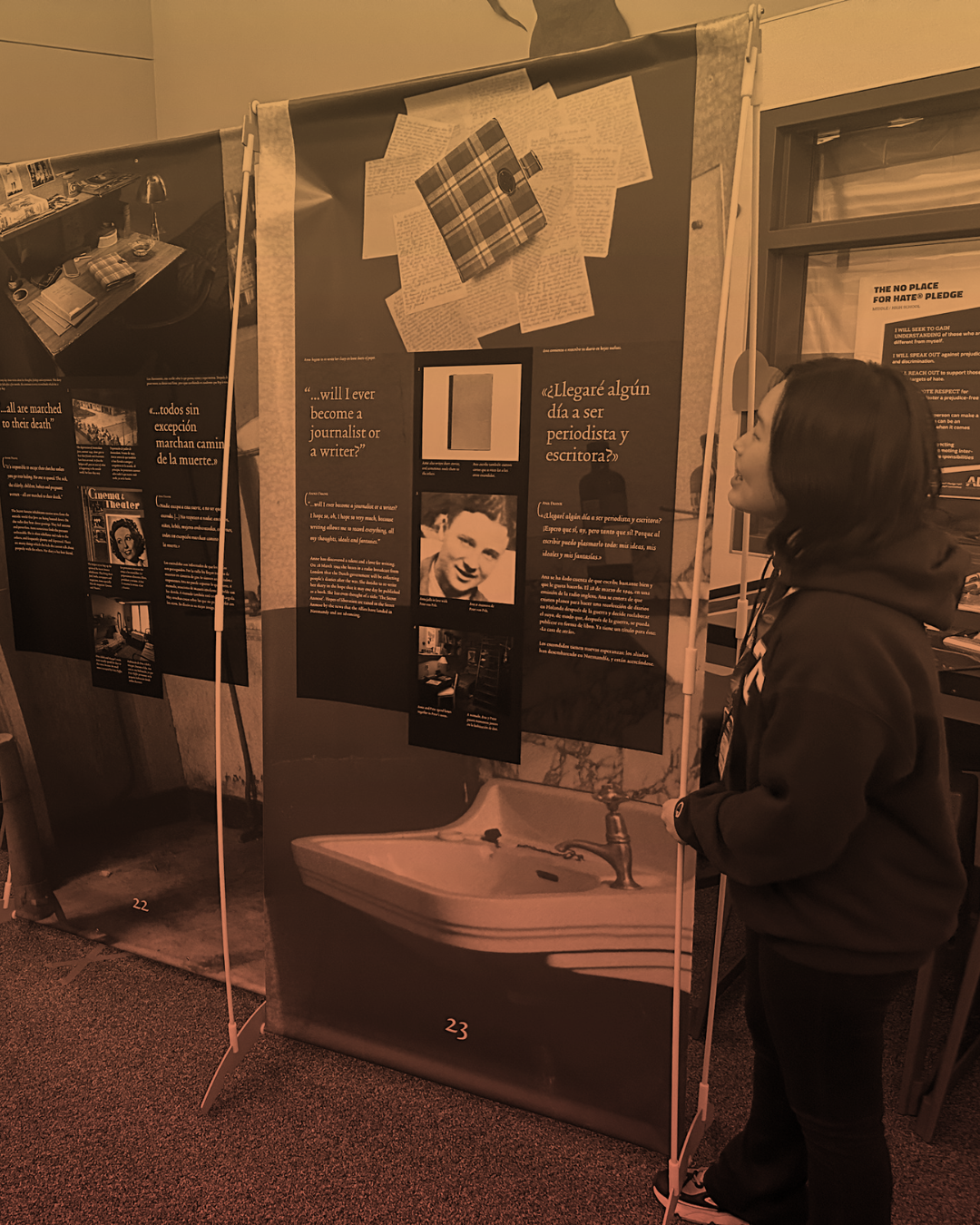
Through photographs, historical images, personal stories, and interactive discussion, the exhibit helps visitors understand how discrimination and hatred can escalate when individuals and societies fail to act. Rather than presenting history as distant or abstract, the exhibit encourages students to make meaningful connections between the past and the world they live in today.
The exhibit has reached communities in more than 80 countries and has engaged hundreds of thousands of students across North America through peer-led tours and educational programming. Legacy of Light Goldberg Institute for Holocaust Education has partnered with the Anne Frank Center to now bring this exhibit to middle schools across San Diego County.

Becoming a Peer Guide
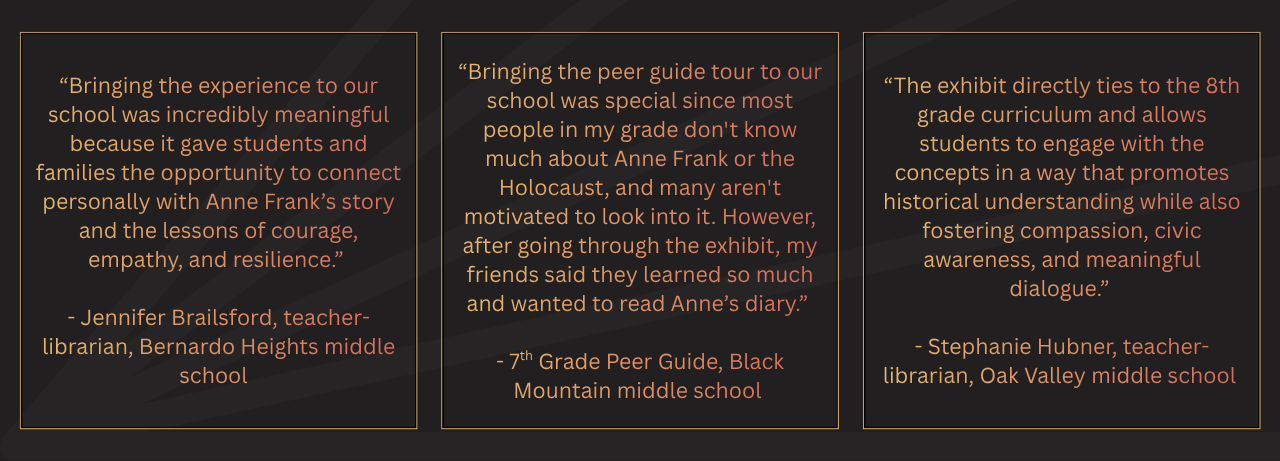
One of the most powerful parts of the Anne Frank exhibit experience is the opportunity for students to become Peer Guides.
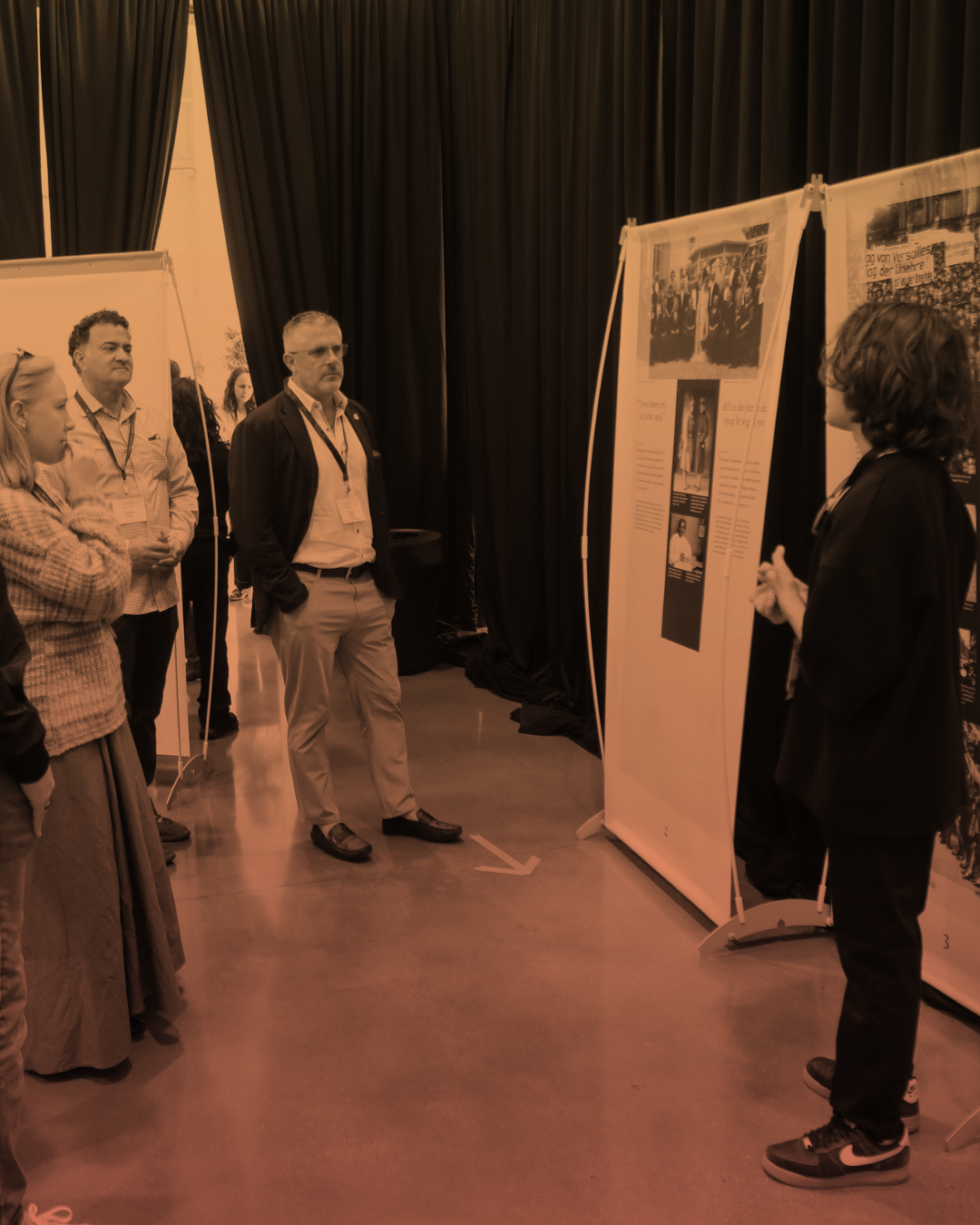
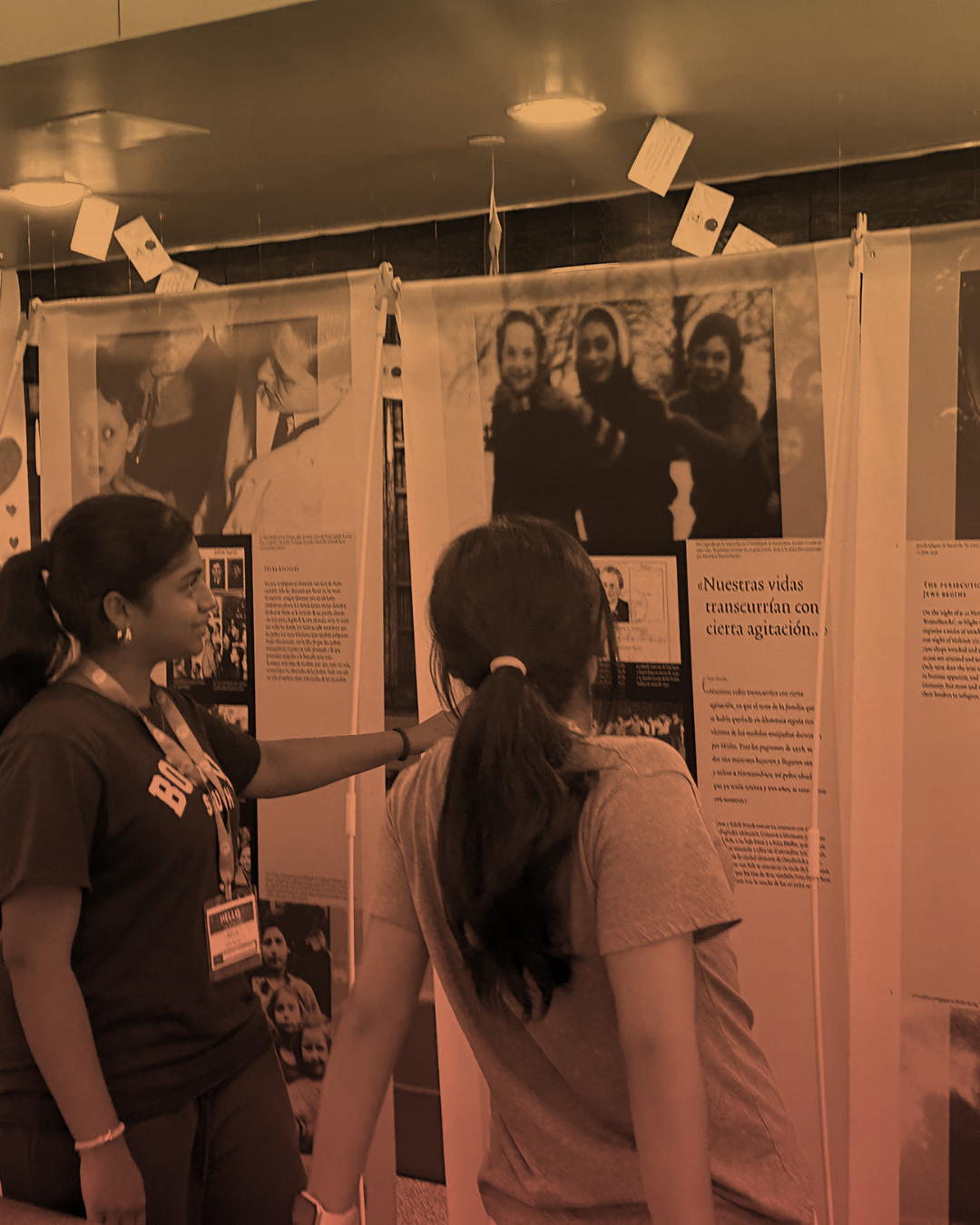
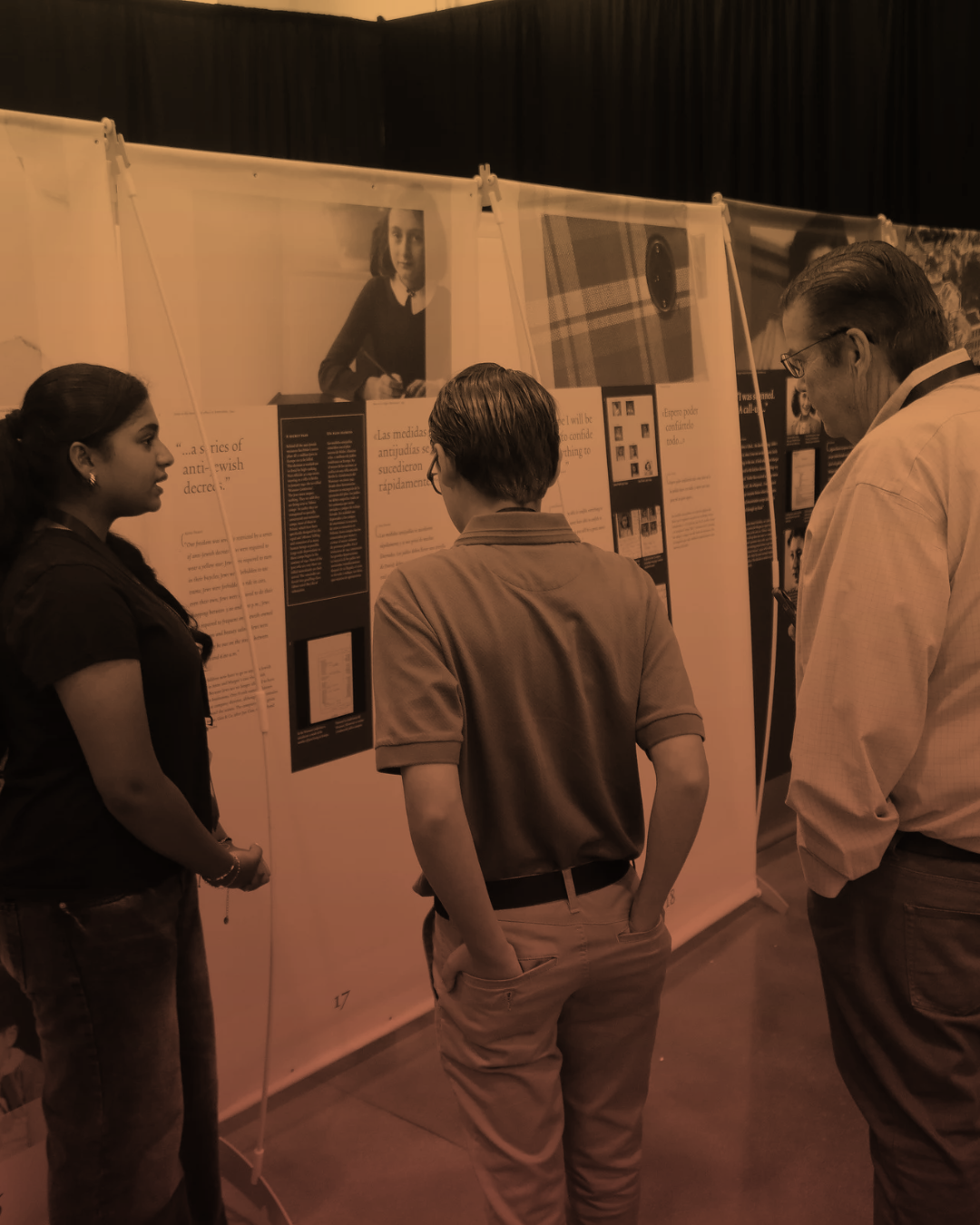
Peer Guides are students who have been trained to lead exhibit tours and facilitate conversations with their peers and community members. Using a peer education model, students learn collaboratively through dialogue, reflection, and discussion rather than traditional lecture-style instruction.
.png) What is Peer Education?
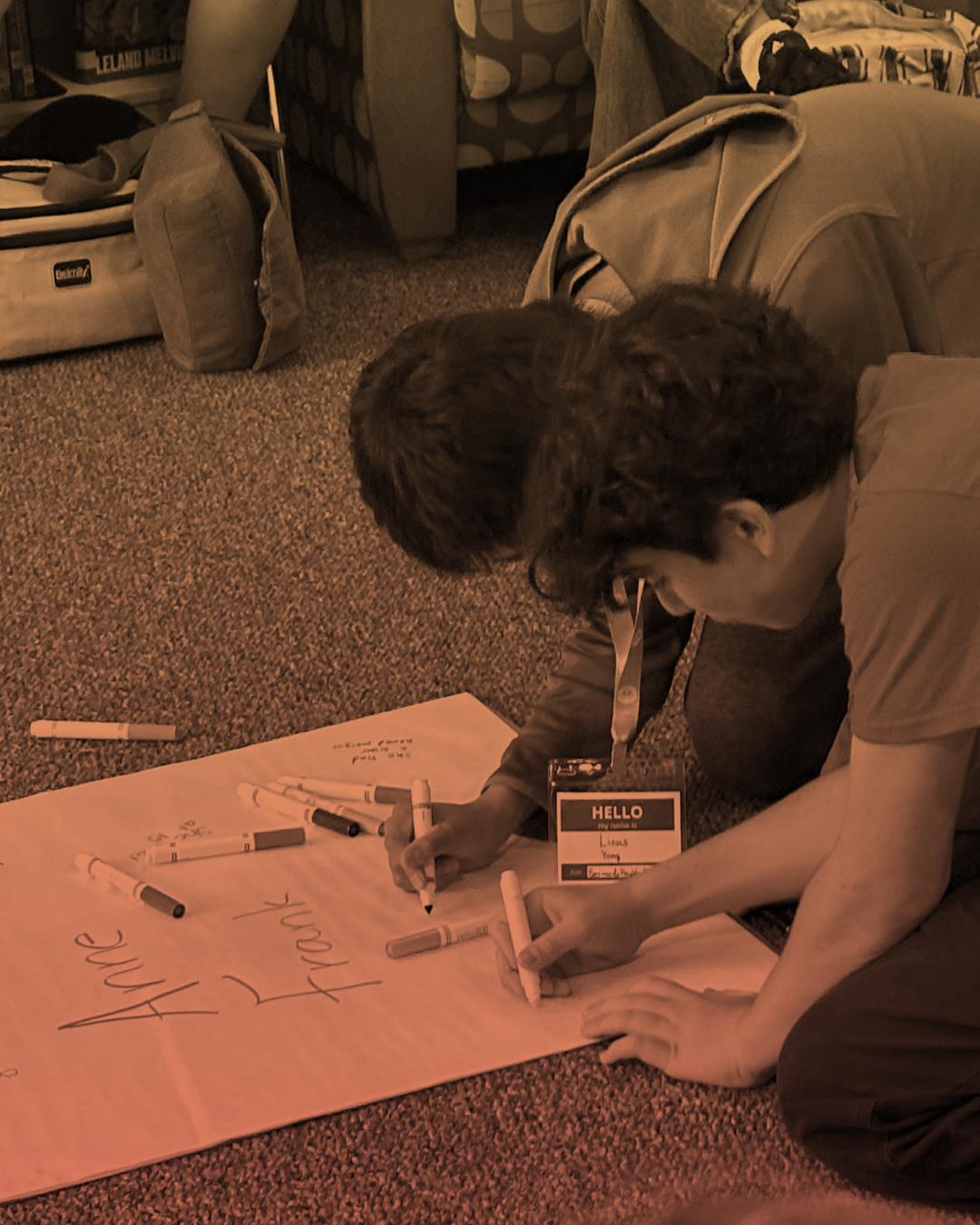
What is Peer Education?Peer education centers young people’s voices and encourages students to learn from one another in an interactive, discussion-based environment. Students are empowered to ask questions, share perspectives, and guide meaningful conversations about history, identity, discrimination, and responsibility.
.png) What Does Peer Guide Training Include?
What Does Peer Guide Training Include?Peer Guide Training is a two-day interactive program designed to fit within the school day whenever possible. Students not only deepen their understanding of Anne Frank’s story, World War II, and Holocaust history, but also build confidence as leaders and facilitators within their school community.
 Who Can Become a Peer Guide?
The Peer Guide program is recommended for students in 8th Grade. Schools are encouraged to select a diverse cross-section of students representing different backgrounds, interests, and experiences. Typically, schools train 10-15 students, though group sizes can vary. Recruitment for Peer Guides is done by the school hosting the exhibit.
.png) What Do Peer Guides Do?
What Do Peer Guides Do?Once trained, Peer Guides lead tours of the exhibit for classmates, educators, families, and community visitors. Tours generally last 30-45 minutes and can be adapted for different group sizes and audiences. The peer-led model creates a more personal and engaging experience for visitors while empowering students to become thoughtful leaders and active participants in conversations about history and human rights.
.png)
.png)
Booking Process
How to Bring Anne Frank: A History for Today to Your School
Request
Submit our inquiry form
Schedule
Confirm dates and logistics with our team
Preparation
Receive educator materials and classroom guides
Experience
Exhibit arrives on your campus
Follow-Up
Access post-visit curriculum, debriefs, and resources
Frequently asked questions
- What does it take to bring the exhibit to our school?
Adequate display space (approximately 1,000 square feet, about the size of a classroom), a commitment to supporting two days of Peer Guide training, staff coordination for scheduling and logistics, time for installation, tours, and community engagement.- How long is the exhibit typically hosted?
- Exhibit schedules vary depending on the host site and their programming goals. We recommend an academic week (five days). It is possible for schools to keep the exhibit on site for an additional week, if more time is needed to accommodate tours for more students in larger schools.
- Who can visit the exhibit?
- The exhibit is ideal for 7th-8th Grade, high school, and community audiences ages 12 and up. We recommend that it be seen by students who are reading The Diary of Anne Frank during that academic year.
Many schools choose to host an open house event during the time the exhibit is on display at their site. We fully support this opportunity to invite parents, friends, and community members to see the exhibit being led by Peer Guides. - How long do tours last and how large can tour groups be?
- Most tours take approximately 45 minutes, though they may range from 30–60 minutes depending on the group size and interest in having discussions. It depends upon how many Peer Guides are available to lead tours, but groups of 30-40 participants can be accommodated at one time.
- How can teachers extend the learning experience?
- We encourage all teachers to show the film The Short Life of Anne Frank to their classes before they come to see the exhibit.
Teachers can supplement tours with additional classroom discussion and free educational resources from the Anne Frank House educational resources page.