Volunteer with Us
Become a Part of the Legacy
At the Legacy of Light Goldberg Institute for Holocaust Education, we believe education is relational. Learning happens not just through information, but through conversation, reflection, and human connection.
Volunteers are at the heart of that belief.
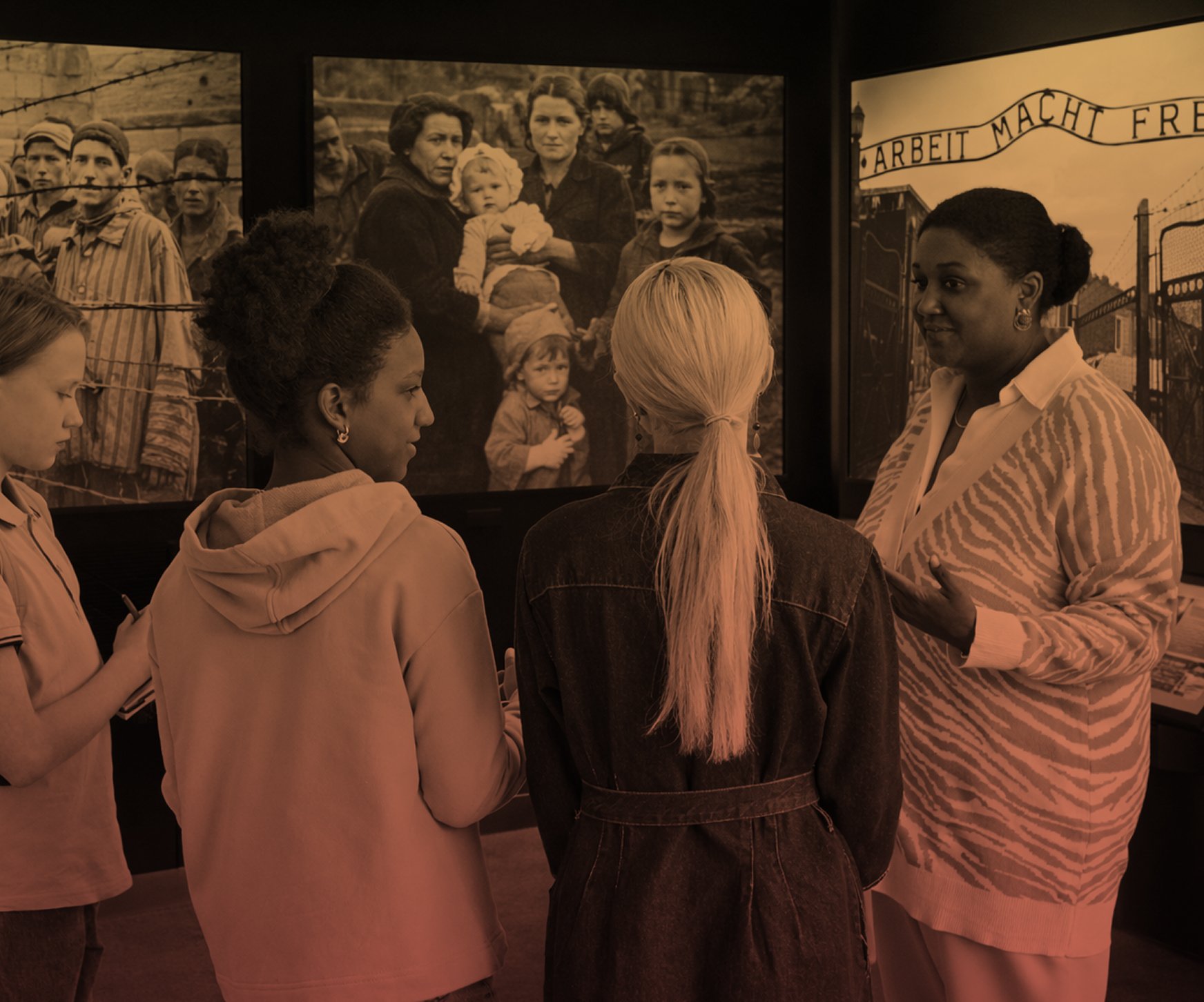
Become A Docent
Be a Trusted Guide. Shape Meaningful Learning. Help History Speak to Humanity.
As a docent, you are not a lecturer or a passive volunteer. You are a trusted guide and ambassador, helping students and community members engage thoughtfully with Holocaust history and its relevance today.
This role is ideal for individuals who are motivated by purpose, committed to learning, and prepared to engage with complex and emotionally challenging material in a thoughtful, student-centered way.


What Does An LLGI Docent Do?
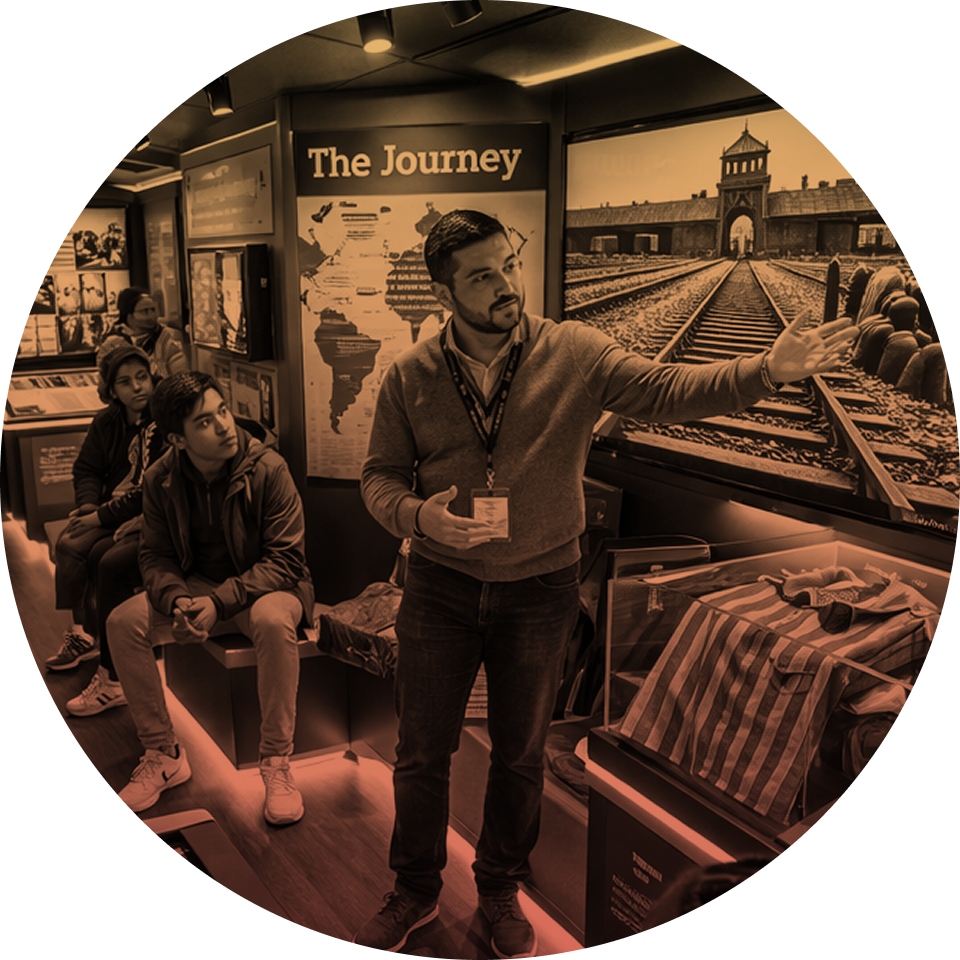
LLGI Docents support learning experiences within the Spark Interactive Mobile Holocaust Museum, in classrooms, and at other community programs.
Depending on the program, docents may:
- Guide students through interactive exhibits and digital stations
- Facilitate small-group discussions and reflection
- Ask open-ended questions that encourage critical thinking
- Support educators and LLGI staff during school visits
- Help ensure a safe, respectful, and supportive learning environment
- Welcome and orient visitors at public and community events
Docents help humanize history – connecting memory to responsibility and learning to action.

Who This Role Is For
LLGI Docents come from many backgrounds. You do not need to be a Holocaust historian.
This role is well suited for individuals who bring:
- Strong interpersonal and communication skills
- Emotional maturity and empathy
- Comfort working with middle and high school students
- A commitment to respectful, accurate language
- Reliability, professionalism, and openness to feedback
- A genuine interest in facilitating dialogue, not delivering lectures
We aim to help you fulfill your purpose by aligning volunteer opportunities with your interests and strengths. As a docent, you may engage in a variety of meaningful tasks - such as lecturing, educating, guiding, interacting with students and community members, and supporting educational programs.
This is not a drop-in or one-time volunteer opportunity. It is a mission-driven role grounded in responsibility and trust.
Because this volunteer work will involve interacting with minors in school settings, all volunteers must consent to and successfully complete a comprehensive background check.
Training & Support
LLGI will provide comprehensive training and ongoing support, including:

Orientation to LLGI's mission and educational philosophy
Foundational Holocaust history and survivor testimony
Facilitation and discussion skills
Trauma-informed engagement and student safeguarding
Hands-on exhibit and technology training
Shadowing and mentorship prior to certification
Ongoing learning opportunities and refresher sessions
You are never expected to do this work alone.
The Application Process
Becoming a LLGI Docent is a thoughtful, multi-step process designed to ensure readiness and mutual fit.
The process includes:

A written application with reflective questions

A conversation with LLGI staff

Required training and shadowing

Certification prior to independent service

Ready to Learn More?
If you feel drawn to this work and prepared to engage with it thoughtfully, we invite you to take the next step.
Frequently Asked Questions
An LLGI docent is a trained volunteer who serves as a trusted guide and ambassador for Holocaust education. Rather than lecturing, docents facilitate conversation, reflection, and meaningful engagement with history - helping students and community members connect the past to responsibility today.
Docents support learning experiences in The Spark Interactive Mobile Museum, classrooms and school-based programs, community and public events, and at other LLGI educational initiatives.
Depending on the program, docents may guide students through interactive exhibits and digital stations, facilitate small-group discussions and reflection, support educators and LLGI staff during visits, help create a safe, respectful, and supportive learning environment, and welcome and orient visitors at community events. At the heart of the role is helping to humanize history, connecting memory to responsibility and learning to action.
No. Docents come from many backgrounds. What matters most is your ability to engage thoughtfully with learners, communicate with empathy, and commit to ongoing learning. LLGI provides comprehensive training and support.
We aim to align volunteer opportunities with your interests and strengths. This role is ideal for individuals with strong communication skills, emotional maturity, and empathy; comfort engaging middle and high school students; a commitment to respectful, accurate language; reliability and professionalism; and a genuine interest in facilitating dialogue rather than delivering lectures.
This is not a drop-in or one-time volunteer role, but a mission-driven commitment rooted in responsibility and trust. Applicants should be prepared for required training and certification, engaging with emotionally complex content, ongoing reflection and learning, professionalism when representing LLGI and Spark Interactive, and supporting learners who may be emotionally impacted.
Yes. Because docents work with minors in school settings, all volunteers must consent to and successfully complete a comprehensive background check.
LLGI provides comprehensive preparation and ongoing support, including orientation to our mission and educational approach; foundational Holocaust history and survivor testimony; facilitation and trauma-informed engagement training; hands-on exhibit and technology instruction; mentorship and shadowing prior to certification; and ongoing learning and refresher opportunities. You are never expected to do this work alone.
We deeply value the experience volunteers bring from other museums, memorials, and educational organizations, and that background often enriches our learning community. However, prior training does not replace LLGI's required preparation.
LLGI training is essential because it focuses on learning to work with The Spark Interactive Mobile Holocaust Museum and its technology, understanding the stories of local Holocaust survivors whose lives and legacies shape our programs, and aligning on shared language, values, and standards when representing LLGI in schools and communities.
Our training ensures that all docents - regardless of prior experience - are prepared to offer learners a consistent, thoughtful, and responsible experience rooted in LLGI's mission.
Initial docent training requires approximately 10 hours and is completed before certification. Training includes orientation to LLGI's mission and educational approach, foundational Holocaust history and local survivor stories, facilitation and trauma-informed engagement strategies, and hands-on experience with interactive exhibits and technology. Ongoing learning and refresher opportunities will be provided to support continued growth.
Becoming an LLGI docent is a thoughtful, multi-step process that includes a reflective application, a conversation with LLGI staff, required training and shadowing, and certification before independent service. We see this process as the start of a meaningful partnership.
If you feel drawn to this work and prepared to engage with history in a thoughtful, relational way, we invite you to reach out and begin the application process.